
Eritrea may offer investment opportunities in mining-linked activities and selected infrastructure-related areas, but no capital should be committed before legal, political-risk, currency, and compliance due diligence.
Resource potential is not enough: the investability of any opportunity depends on verified rights, government approvals, counterparties, financing, and workable payment arrangements.
For international investors, the most practical starting point is often a structured market assessment or a supply-and-services contract rather than immediate asset ownership.
Mining firms, engineering providers, logistics specialists, and Africa-focused advisors may find relevant commercial openings, but the operating environment requires a high tolerance for uncertainty.
Eritrea’s Red Sea position, mineral deposits, and potential in areas such as potash create long-term interest. The key question is not simply where the resources are, but whether a specific project can be legally accessed, financed, supplied, and exited on acceptable terms.
At a Glance
- Mining-linked opportunities are among Eritrea’s most visible foreign-investment prospects, particularly around gold, copper, zinc, and related project services.
- Government approvals, foreign-exchange access, and transaction structure can materially affect whether an opportunity is investable.
- Sanctions screening, legal review, technical validation, and exit planning should come before a binding commitment or capital transfer.
| Entry Area | Capital Intensity | Approval Complexity | Key Exposure | Specialist Support to Consider |
|---|---|---|---|---|
| Mining ownership or project stake | High | High | Rights, permits, financing, foreign exchange, operations | Mining legal counsel, technical consultants, political-risk insurance |
| Mining equipment, engineering, or logistics supply | Moderate | Moderate to high | Counterparty payment, import process, export controls, delivery | Trade compliance review, contract counsel, logistics support |
| Port, fisheries, or trade-related projects | Moderate to high | High | Government approvals, regional conditions, infrastructure access | Market-entry advisors, legal counsel, operational feasibility review |
| Agriculture or supply-chain venture | Variable | High | Water, power, transport, inputs, land arrangements | Technical feasibility team, local operating review, logistics specialists |
What Makes Eritrea a Potential—but High-Risk—Investment Market?
The short answer for investors: opportunity depends on sector access and risk tolerance
Eritrea is located on the Red Sea and borders Sudan, Ethiopia, and Djibouti. Its geography gives the country long-term strategic relevance for trade, logistics, ports, and fisheries, while its mineral endowment has drawn attention from resource investors. However, a potential opportunity is not automatically an accessible investment opportunity. Investors need to determine whether a project has a valid route to approvals, funding, imports, payments, and dispute resolution.
Why resource potential alone is not an investment thesis
Mining has been one of Eritrea’s most visible foreign-investment sectors, with deposits associated with gold, copper, zinc, and other minerals. The Bisha mining area has been a major industrial mining project. Eritrea has also reported potash potential in the Danakil Depression area. Yet resource potential must be separated from commercial readiness. Development may depend on financing, infrastructure, permits, technical studies, market conditions, and the terms available to a specific investor.
The importance of government relationships, permits, and transaction structure
The economy has a substantial state role. This can affect licensing, procurement, foreign-exchange access, and partnership structures. Before treating any proposal as actionable, confirm who has authority to negotiate, sign, approve, and perform the agreement. A cross-border investment due diligence review should also test the legal status of the relevant entity, the project rights being offered, and whether the proposed structure is compatible with the investor’s own compliance obligations.
Where Commercial Opportunities May Be Concentrated
Mining services, exploration support, and processing-linked infrastructure
For some firms, supplying a project may be more manageable than acquiring a direct ownership stake. Potential roles can include equipment supply, engineering, technical consulting, transport coordination, exploration support, or processing-linked infrastructure. This route can still involve meaningful exposure to payment risk, import requirements, compliance screening, and local execution. A supply contract should not be treated as low risk simply because it does not transfer mineral ownership.
Potash and industrial minerals: long development cycles and large capital needs
Potash potential in the Danakil Depression may be relevant to investors able to assess long-cycle industrial projects. Such projects require particular caution because their viability can turn on infrastructure, financing, permits, market conditions, and development readiness. A feasibility study should distinguish geological potential from an executable business plan. Investors should also review the practical requirements for power, water, transport, equipment imports, and product movement.
Port, logistics, fisheries, and trade-related possibilities
Eritrea’s Red Sea coastline may create future possibilities in port, logistics, fisheries, and trade-related development. These areas remain subject to government approvals and regional conditions. A market-entry assessment should identify the exact service or asset being considered, the public approvals required, the operational counterparties, and the payment path. Commercial interest in a strategic location does not remove the need for a verified operating model.
Agriculture and basic supply-chain projects: practical constraints to assess first
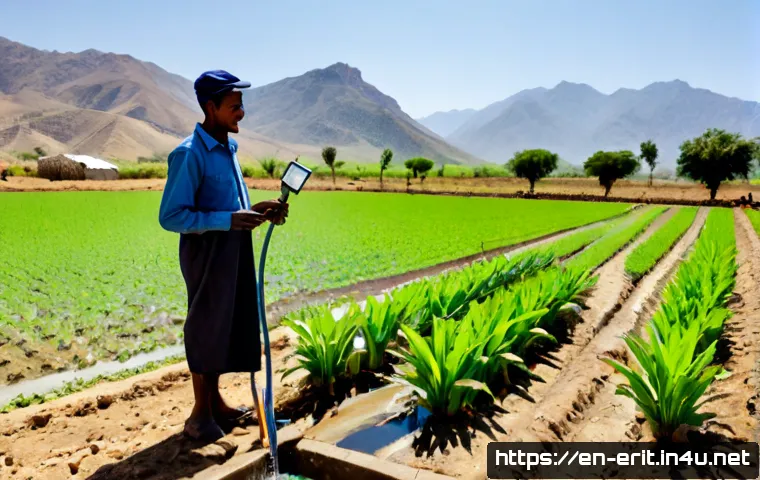
Agriculture and supply-chain ventures should begin with operational realities rather than broad demand assumptions. Review access to inputs, transport, storage, power, water, import dependencies, and offtake arrangements. Investors should not assume that a local need automatically creates a bankable private project. The most useful initial deliverable may be a focused technical and legal market study that identifies constraints before a larger commitment is considered.
Compare Entry Routes, Capital Requirements, and Risk Exposure
Direct project investment versus joint ventures and minority stakes
Direct investment offers the greatest potential control, but it can also create the widest exposure to project delays, regulatory uncertainty, capital needs, and operating obligations. A joint venture or minority stake may reduce some upfront commitment, but it does not remove the need to verify governance rights, funding responsibilities, transfer restrictions, and exit provisions. Current foreign ownership limits, local-partner rules, and licensing timelines should be confirmed for the specific sector and project.
Supplying equipment, engineering, logistics, or professional services instead of owning assets
Service-provider entry can be a sensible alternative for companies with relevant mining project services, engineering capability, logistics capacity, or legal and technical advisory expertise. It may allow a company to test commercial demand without taking direct resource ownership. Still, contracts need clear scope, payment mechanics, delivery obligations, compliance terms, and dispute provisions. Export-control restrictions and restricted-party screening may also apply depending on the supplier’s jurisdiction and goods.
Comparing upfront diligence costs with long-term operating commitments
It can be tempting to limit legal or technical spending at the beginning. In a restricted frontier market, that decision can be costly. The relevant comparison is not simply advisory cost versus no advisory cost; it is the cost of early verification versus the cost of entering a project with defective rights, an unsuitable counterparty, unworkable payment arrangements, or a weak exit path. Budget planning should cover legal review, technical studies, logistics analysis, compliance screening, and possible political-risk insurance.
When political-risk insurance and specialist legal advice may be worth the cost
Political-risk insurance may be worth assessing where an investment has significant country, payment, or contract-performance exposure. It is not a substitute for diligence, and availability or terms cannot be assumed. Specialist legal advice is particularly relevant when reviewing corporate authority, project rights, tax and royalty terms, dispute resolution, sanctions obligations, and cross-border payment provisions. Investors should compare policy scope and legal recommendations against the actual transaction structure.
Due Diligence Steps Before Sending Capital or Signing a Contract
Verify corporate counterparties, beneficial ownership, and authority to contract
Identify every entity involved in the transaction. Verify corporate registration, beneficial ownership, management authority, and signing authority. If a local intermediary, state-linked entity, or project company is involved, document its role and confirm what rights it can actually grant. A memorandum of understanding may signal interest, but it should not be assumed to create a bankable project right.

Review permits, land or mineral rights, tax terms, and dispute-resolution provisions
Review the underlying permits and rights rather than relying on summaries. Confirm the status of land or mineral rights, licenses, project approvals, tax arrangements, royalty terms, customs treatment, and any stated stability protections. The current terms of these matters are project-specific and require direct verification. Contract documents should also address governing law, dispute-resolution mechanisms, force majeure, termination rights, and transfer restrictions.
Test foreign-exchange access, payment mechanics, and repatriation scenarios
The Eritrean nakfa is the country’s currency. Investors should test how capital will enter, how suppliers will be paid, how revenue will be received, and whether foreign currency can be repatriated on the proposed timetable. These questions should be addressed before funds are committed, not after equipment is ordered or obligations are signed. Build practical scenarios for delayed payment, currency constraints, and changes in operational timing.
Screen sanctions, export controls, anti-corruption exposure, and supply-chain restrictions
The UN arms embargo on Eritrea was lifted in 2018. That does not remove the need for current sanctions and restricted-party screening in an investor’s own jurisdiction. Review applicable export controls, anti-bribery requirements, supply-chain restrictions, and banking compliance expectations. A qualified compliance and legal review should cover counterparties, beneficial owners, financial flows, equipment, intermediaries, and contractual commitments.
Common Investment Mistakes in Restricted Frontier Markets
Treating a memorandum of understanding as a bankable project right
An MOU, introductory letter, or informal commitment is not a substitute for verified permits, contractual authority, and enforceable rights. Keep commercial discussions separate from legal confirmation. Do not use preliminary documents as the basis for a major capital allocation.
Underestimating infrastructure, power, water, transport, and import dependencies
Resource and infrastructure projects can be constrained by the practical systems around them. A project may require imported equipment, reliable transport, water, power, storage, and a workable route to market. Each dependency should be tested in a technical feasibility review and reflected in the project schedule and contract structure.
Assuming commodity prices will offset regulatory or execution risk
Strong commodity conditions do not solve title issues, permit uncertainty, operational constraints, or foreign-exchange challenges. A sound investment case should remain disciplined about execution risk even when the underlying resource appears attractive.
Entering without an exit, dispute, or force-majeure plan
Before entry, define the conditions under which capital can be withdrawn, an interest can be transferred, a contract can be terminated, or a dispute can be handled. A credible exit plan is not pessimism; it is part of responsible transaction design.
Selection Criteria and Comparison Summary
Choose direct investment only when project rights, approvals, financing assumptions, and operating responsibilities have been independently reviewed. Choose a joint venture or minority position only when governance, funding calls, information rights, and exit provisions are clear. Choose a supply or advisory contract when your firm can provide defined expertise without taking full asset-level exposure. Choose a low-commitment market study when the current status of permits, ownership rules, project funding, or foreign-exchange access remains unclear.
Before selecting partners, compare: legal counsel with cross-border transaction capability; political-risk insurance options suited to the proposed exposure; independent feasibility and technical reviewers; sanctions and export-control support; and logistics specialists able to assess delivery and operating dependencies. For official requirements and detailed service terms, review the relevant provider or authority page before making a commitment.
Closing Thoughts
Eritrea can be relevant to investors interested in mining, industrial minerals, and selected Red Sea-linked commercial activities. The opportunity is best approached as a high-risk, verification-heavy market rather than a straightforward frontier allocation. A disciplined investor separates resource potential from legally accessible, financeable, and operationally workable projects. Early spending on targeted due diligence may be more valuable than a fast commitment.
Useful Information to Keep in Mind
Currency: Eritrea uses the Eritrean nakfa (ERN). Location: The country sits on the Red Sea and borders Sudan, Ethiopia, and Djibouti. Visible investment sector: Mining has been a prominent area of foreign-investment interest. Compliance: Current jurisdiction-specific sanctions and restricted-party checks remain essential even though the UN arms embargo was lifted in 2018.
Important Notes
This overview does not confirm the availability, legality, profitability, or present readiness of any Eritrean project. Foreign ownership rules, permit timing, local-partner requirements, tax terms, royalty terms, project funding, and repatriation conditions require current, transaction-specific verification. Investors should obtain qualified legal, technical, tax, compliance, and insurance advice before signing documents or transferring capital.
Frequently Asked Questions
Q1. Is Eritrea safe for foreign investment?
A1. Eritrea should be assessed as a high-risk market for foreign investment. Potential opportunities may exist, especially in mining-linked sectors, but legal rights, approvals, currency access, compliance obligations, and operational conditions must be verified for each transaction. Safety and suitability depend on the specific project structure and the investor’s risk tolerance.
Q2. Which sectors offer the most realistic commercial opportunities in Eritrea?
A2. Mining and mining-related services are among the most visible areas because Eritrea has deposits associated with gold, copper, zinc, and other minerals, and the Bisha mining area has been a major industrial mining project. Potash potential, logistics, port-related activity, fisheries, and selected supply-chain projects may also merit review, subject to approvals, infrastructure, financing, and commercial readiness.
Q3. How much should an investor budget for legal, technical, and political-risk due diligence before entering Eritrea?
A3. No reliable single budget applies to every transaction. The required scope depends on the sector, transaction size, counterparties, equipment involved, financing structure, and compliance jurisdictions. At a minimum, the planning process should account for legal review, corporate and beneficial-ownership checks, technical feasibility work, sanctions and export-control screening, logistics assessment, and an evaluation of political-risk insurance where relevant.